Soft Starter vs. Star-Delta Starter: Current, Torque & Real Total Cost Compared
Oct 15,2026 | simplybuy industrial
1. Why Reduce Motor Starting Current?
Starting a three-phase squirrel-cage induction motor Direct-On-Line (DOL) causes a severe current surge—typically 6 to 8 times the Full-Load Current (In). This inrush current leads to:
- Voltage drops on the supply grid, affecting neighboring sensitive electronics.
- Mechanical shocks that accelerate wear on belts, gears, couplings, and bearings.
Both Star-Delta starters and Soft Starters mitigate these issues by reducing the terminal voltage applied to the motor windings during startup, but they do so in fundamentally different ways:
- Star-Delta Starter (Fixed Step Reduction): In the Star connection, each winding receives 1/√3 (approx. 58%) of line voltage. Consequently, line current drops to 1/3 of a DOL start (approx. 2 ~ 2.7 × In). While simple and low-cost, this reduction ratio is fixed and non-adjustable.
- Soft Starter (Smooth Continuous Ramp): Utilizes solid-state thyristors (SCRs) to smoothly ramp up the voltage. For example, the Schneider Altistart 48 (ATS48) allows users to set a flexible current limit from 1.5 to 7 × In (typically set at 300% ~ 450%) with customizable ramp times from 1 to 60 seconds.
2. Why Starting Torque Dictates Selection More Than Current
Many buyers focus solely on starting current, but starting torque is what actually accelerates the load. Motor torque is proportional to the square of the applied voltage:
T ∝ V2
Because a Star-Delta starter reduces voltage to ~58%, starting torque drops significantly to 1/3 of DOL torque (typically down to 0.5 ~ 0.85 × rated torque). If the load's breakaway torque exceeds this value, the motor will stall and overheat.
Typical Load Compatibility Guide
| Load Type | Torque Characteristics | Recommended Starter |
|---|---|---|
| Centrifugal Pumps & Fans | Low initial breakaway torque; load torque increases with the square of speed | Star-Delta or Soft Starter |
| Screw Compressors, Empty Conveyors | Moderate starting resistance | Star-Delta (if verified) or Soft Starter |
| Loaded Conveyors, Crushers, Mixers | High initial static friction / breakaway torque | Soft Starter (with Torque Control) |
| High-Inertia Blowers, Extruders | Heavy load requiring long acceleration times | Soft Starter or VFD |
Before specifying a Star-Delta starter, ensure the motor has 6 leads/terminals and a winding rated for Delta connection at the line voltage. A 3-lead motor or a star-wired motor cannot be started using a Star-Delta system without rewinding.
3. Bill of Materials (BOM) & Total Cost of Ownership
To evaluate cost accurately, compare the complete assembly Bill of Materials (BOM) and lifetime maintenance rather than just the base unit prices.
1. Hardware Assembly Comparison
- Star-Delta Starter Assembly: 3 Contactors (Main, Delta, and Star with varying frame sizes), 1 Overload Relay (or Motor Protection Circuit Breaker, e.g., Schneider TeSys GV2), 1 Timer Relay (or PLC logic), 6-Core Cable Run, larger enclosure footprint.
- Soft Starter Assembly: 1 Soft Starter Unit (e.g., Schneider ATS48 with built-in thermal, phase loss, underload, and overcurrent protections), 1 Bypass Contactor, Standard 3-Core Cable Run, integrated industrial communications (Modbus RTU).
2. Hidden Maintenance Costs (TCO)
- Mechanical Wear: Star-Delta panels use 3 electro-mechanical contactors subject to contact erosion and arcing.
- Water Hammer Damage: On pump applications, Star-Delta starters force a coast-to-stop, generating severe water hammer that damages check valves, pipe joints, and seals. Soft starters offer a controlled Soft Stop ramp that eliminates hydraulic shocks entirely.
4. Head-to-Head Comparison
| Decision Factor | Star-Delta Starter | Soft Starter (e.g., Schneider ATS48) |
|---|---|---|
| Starting Current | Fixed at ~1/3 DOL (2 ~ 2.7 × In) | Adjustable (150% ~ 700% × In) |
| Starting Torque | Fixed at ~1/3 DOL torque | Adjustable via voltage ramp |
| Transition Shock | Transient current spikes & torque shock during transition | Smooth & continuous (no transition jump) |
| Stopping Mode | Coast to stop only | Soft Stop (1–60s ramp down) & dynamic braking |
| Motor Requirement | Requires 6 leads, Delta-rated windings | Standard 3-lead motor |
| Integrated Protection | External overload relay required | Built-in (thermal, phase loss, stall, PTC monitoring) |
| Network Comms | None (requires external PLC IO) | Built-in (Modbus RTU / PROFINET) |
| Wear Items | 3 contactors (arcing & mechanical wear) | Solid-state power stage (minimal moving parts) |
| Upfront Hardware Cost | Low | Moderate to High |
5. When Is Neither Starter the Right Answer?
- Small Motors (< 5.5 kW / 7.5 HP): On robust power grids, compact electronic Direct-On-Line starters (such as the Siemens SIMATIC ET 200SP 3RK1308 series) provide integrated safety and motor protection at a lower cost.
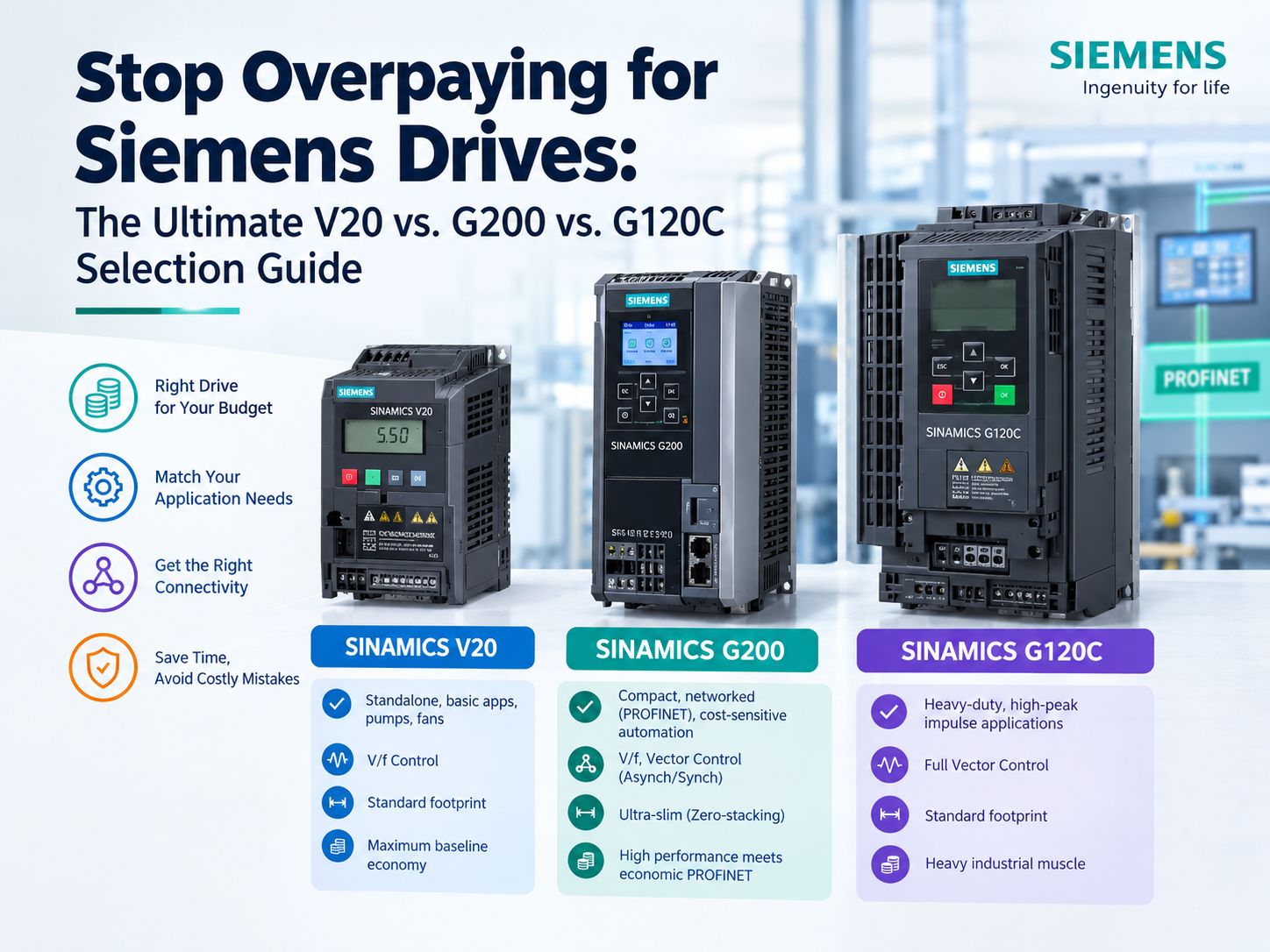
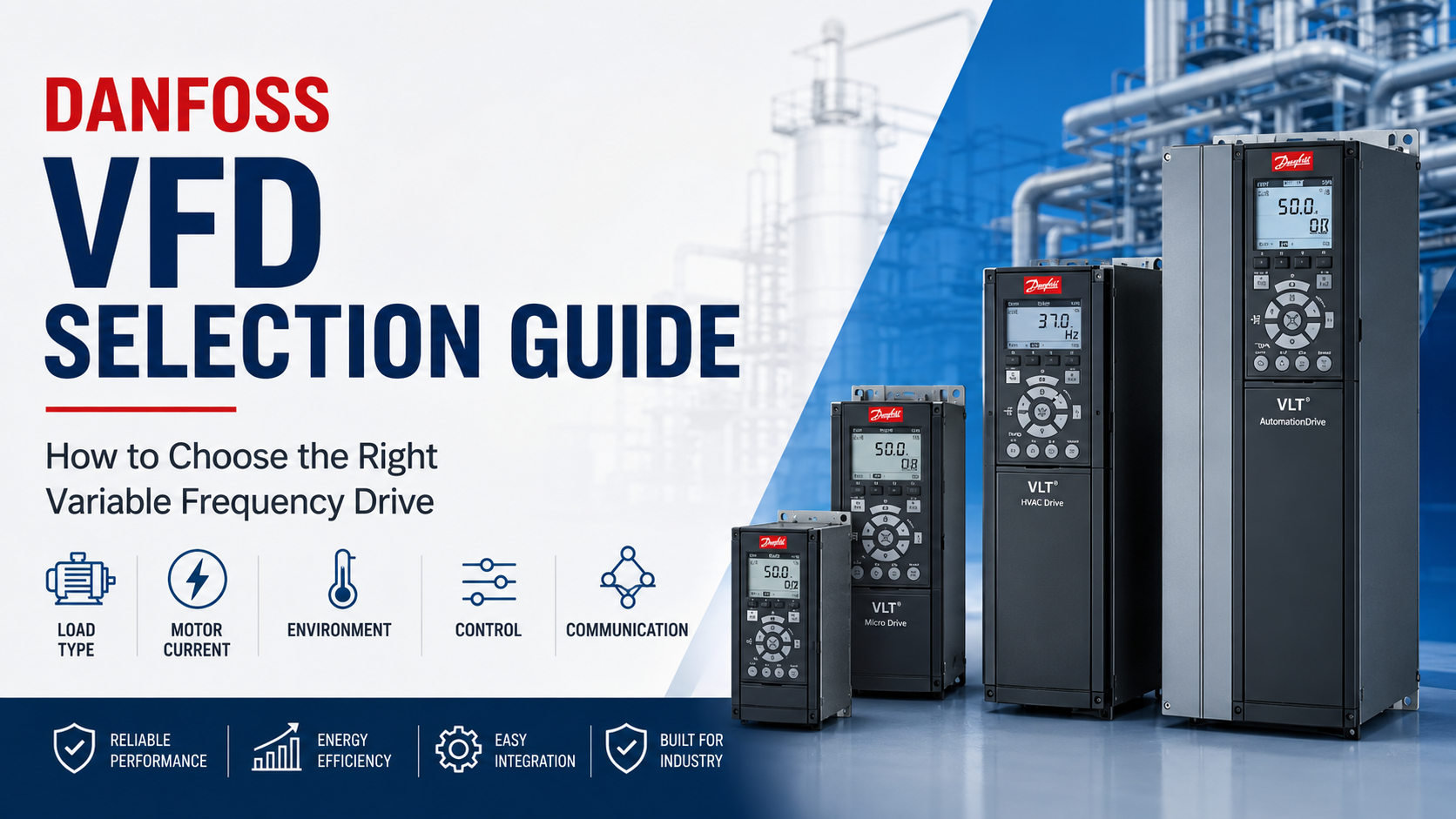
- Variable Speed Control Requirements: If your process requires speed regulation during operation, neither starter will suffice; a Variable Frequency Drive (VFD) is required.
Comment